
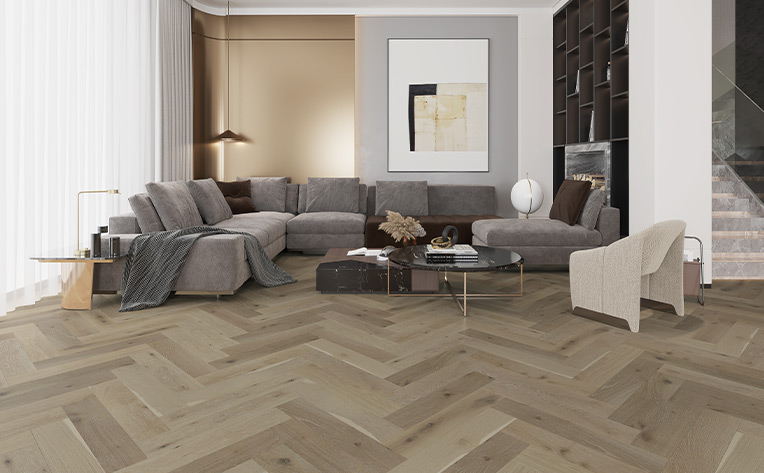

When evaluating residential investments that yield a reliable return on equity, flooring stands out as a critical architectural component. Beyond its immediate structural utility, flooring serves as the visual and tactile foundation of a home. It is often the very first element a prospective buyer notices upon crossing the threshold, setting an immediate psychological tone regarding the maintenance, quality, and overall value of the property.
In the current real estate market, buyers are exceptionally discerning. They look past superficial staging, focusing instead on high-end materials, architectural longevity, and ease of daily maintenance. Standard, low-grade carpeting and cheap laminates no longer suffice to command a premium sales price. Instead, contemporary valuation increases are driven by flooring selections that offer organic beauty, structural durability, and a sense of sophisticated spatial continuity.
Wide Plank Engineered European White Oak
Hardwood remains the undisputed gold standard for driving residential equity, but the specific characteristics of the wood specified matter immensely. Traditional, narrow-strip oak or high-gloss red oak variations are stepping aside for wide-plank engineered European white oak featuring a matte or satin low-luster finish.
The structural composition of premium engineered hardwood is highly appealing to modern buyers. Constructed with a solid hardwood wear layer bonded over a multi-ply, cross-grained substrate, engineered wood provides immense dimensional stability. This engineering allows it to resist the natural warping, cupping, and gapping that traditional solid wood experiences when subjected to fluctuations in temperature and household humidity.
From a design perspective, wide planks measuring between seven and ten inches in width create a clean, minimalist visual plane. By reducing the overall number of seams across a room, wide planks make open-concept spaces feel significantly larger and less cluttered. European white oak is specifically favored for its neutral, underlying tan and wheat tones, which integrate seamlessly with contemporary interior paint palettes and diverse design styles.
Architectural Geometrics and Herringbone Accents
While linear planks remain the standard for entire residential layouts, high-end buyers are increasingly willing to pay a premium for custom geometric installations in focal areas. Herringbone and chevron patterns are leading this movement, elevating standard spaces into architectural showcases.
Historically reserved for grand European estates, the herringbone pattern involves laying rectangular wood blocks in a precise zigzag formation. This arrangement creates a dynamic sense of movement, drawing the eye through hallways, entry entryways, and formal dining rooms.
Because geometric installations require highly skilled craftsmanship, a flawless subfloor, and additional material waste calculation, their presence serves as an immediate indicator of a custom, high-end renovation. Real estate appraisals routinely reflect higher valuations for properties featuring these details, as they distinguish the home from cookie-cutter neighborhood listings.
Large Format Porcelain and Stoneware Slabs
In high-traffic zones, wet areas, and modern kitchens, large-format porcelain tile has emerged as a dominant force for increasing home equity. The trend has shifted dramatically away from standard twelve-inch square tiles with thick grout lines toward expansive porcelain slabs measuring twenty-four by forty-eight inches or even larger.
Porcelain is fired at much higher temperatures than standard ceramic tile, making it incredibly dense, non-porous, and impervious to moisture infiltration. Large-format slabs dramatically reduce the number of grout lines required across a surface. Grout is traditionally the first component of a tiled floor to stain, crack, or harbor mildew, so minimizing these joints creates an incredibly hygienic and low-maintenance surface that appeals directly to busy professionals.
The aesthetics of contemporary porcelain slabs rely heavily on advanced high-definition digital printing technologies. High-end porcelain can flawlessly replicate the deep veining of Calacatta marble, the rugged texture of slate, or the soft architectural appearance of troweled microcement without any of the associated sealing liabilities or chemical sensitivities of real geological materials.
Premium Rigid Core Luxury Vinyl Plank
For secondary residential levels, finished basements, and high-intensity family spaces, high-end rigid core Luxury Vinyl Plank, commonly referred to as LVP, has become a massive value driver. However, the equity increase is tied strictly to premium iterations featuring a Stone Plastic Composite core rather than older, flexible vinyl varieties.
SPC rigid core LVP consists of a dense composite layer of limestone powder and stabilizers, topped with a heavy-duty photographic wear layer and a thick commercial-grade protective coating. This specific construction renders the flooring completely waterproof and virtually impervious to structural dents from dropped objects, heavy furniture legs, or pet claws.
Homebuyers view premium LVP as a major asset due to its utility. It allows them to maintain a consistent wood look throughout an entire home, including areas where natural hardwood would fail, such as below-grade basements, mudrooms, and laundry spaces. To maximize the value add, these floors must feature a minimum twenty-mil wear layer, authentic registered-in-register embossing that matches the visual wood grain, and integrated acoustic underlayment to eliminate the hollow clicking sound often associated with cheap floating floors.
Seamless Indoor Outdoor Flooring Continuations
As modern residential architecture continues to emphasize the integration of indoor and outdoor living areas, flooring strategies have adapted to reinforce this spatial connection. Creating a seamless transition between interior living areas and exterior patios or decks is a proven mechanism for expanding the perceived square footage of a property.
This trend is typically executed using matching or closely coordinated porcelain pavers. Designers utilize standard thickness porcelain slabs for the interior living room or kitchen floor, and then continue the exact same visual colorway onto the outdoor patio using a thicker, frost-resistant two-centimeter porcelain paver version.
When paired with panoramic sliding glass doors or bi-fold wall systems, this flooring strategy tricks the brain into viewing the outdoor living space as an authentic extension of the home interior. This visual expansion drives appraisals upward by maximizing the property’s functional entertainment footprint and emphasizing a luxury lifestyle design.
Sustainable and Eco Certified Hard Surfaces
The modern luxury home buyer is increasingly conscious of environmental health, indoor air quality, and sustainable supply chains. Properties that feature eco-certified flooring options command higher valuations due to their alignment with healthy building initiatives.
Flooring options certified by organizations such as FloorScore or GREENGUARD Gold ensure that the materials emit zero or minimal volatile organic compounds into the home environment. These certifications prove that the adhesives, finishes, and core materials do not off-gas toxic chemicals like formaldehyde, which can compromise indoor air quality.
Additionally, sustainably harvested timbers, bamboo flooring with dense strand-woven construction, and natural cork flooring are gaining value-driven traction. Cork is highly valued for its natural sound dampening qualities, thermal insulation properties, and antimicrobial nature. Marketing a home with certified healthy and sustainable materials provides a distinct competitive advantage in premium real estate sectors.
Frequently Asked Questions
Why does European white oak add more value to a home compared to red oak?
European white oak contains high concentrations of natural tannins, which give it a neutral, golden-brown undertone that accepts modern stains and gray or beige washes without turning pink or orange. Red oak, by contrast, has strong pink undertones that limit its color compatibility with modern neutral design schemes. Furthermore, white oak has a tighter, more linear grain pattern and closed cellular structures, making it naturally more resistant to moisture and wear, which translates to a higher perceived value among home buyers.
What is a wear layer on engineered wood and why does it affect home valuation?
The wear layer is the top slice of real solid hardwood that is bonded to the engineered core structure beneath. The thickness of this wear layer, measured in millimeters, directly dictates how many times the floor can be sanded down and refinished in the future. A thin wear layer of one to two millimeters cannot be safely sanded, whereas a premium wear layer of four to six millimeters can be refinished multiple times, giving the floor a lifespan comparable to solid wood and justifying a higher property valuation.
Can luxury vinyl plank flooring genuinely increase the appraisal value of a luxury home?
Yes, but its impact on value depends entirely on its placement and product quality. In primary living areas of ultra-luxury homes, buyers still expect authentic hardwood or stone. However, in spaces like walk-out basements, home gyms, children’s playrooms, and pool houses, premium rigid core LVP increases value by providing a completely waterproof, high-durability barrier that eliminates the risk of water damage or expensive maintenance down the line.
What does registered in register mean when discussing premium synthetic flooring?
Registered-in-register, or EIR, is an advanced manufacturing technique where the physical texture of the protective topcoat is precisely aligned with the underlying photographic image of the wood or stone grain. On standard synthetic floors, the texture is applied randomly, creating a disconnect when light hits the surface. EIR ensures that when you see a knot or wood grain indentation in the photo, your hand and foot actually feel that exact structural indentation, creating a convincing replication of real timber that elevates the material’s premium feel.
How does reducing grout lines with large format tile impact a home’s long term maintenance?
Grout is a highly porous mixture of cement and sand that naturally absorbs water, body oils, dirt, and cleaning chemicals, leading to inevitable discoloration and structural degradation over time. By utilizing large-format porcelain slabs, you eliminate up to eighty percent of the traditional grout joints found in a room. This structural change drastically reduces the labor required for scrubbing, bleaching, and resealing lines, preserving a pristine appearance that maintains the property’s clean aesthetic for years.
Why is underlayment selection critical when installing floating floors for home resale?
When home buyers walk across a floating floor, such as an engineered wood or LVP option that isn’t glued down, a low-grade underlayment will create a distinct, hollow clicking sound and a slight flexing feeling underfoot. This instantly signals a cheap installation to the buyer’s subconscious mind. Utilizing a high-density cork, rubber, or specialized acoustic foam underlayment dampens the sound transfer and stabilizes the floor, mimicking the solid, expensive feel of traditional nail-down hardwood.
