
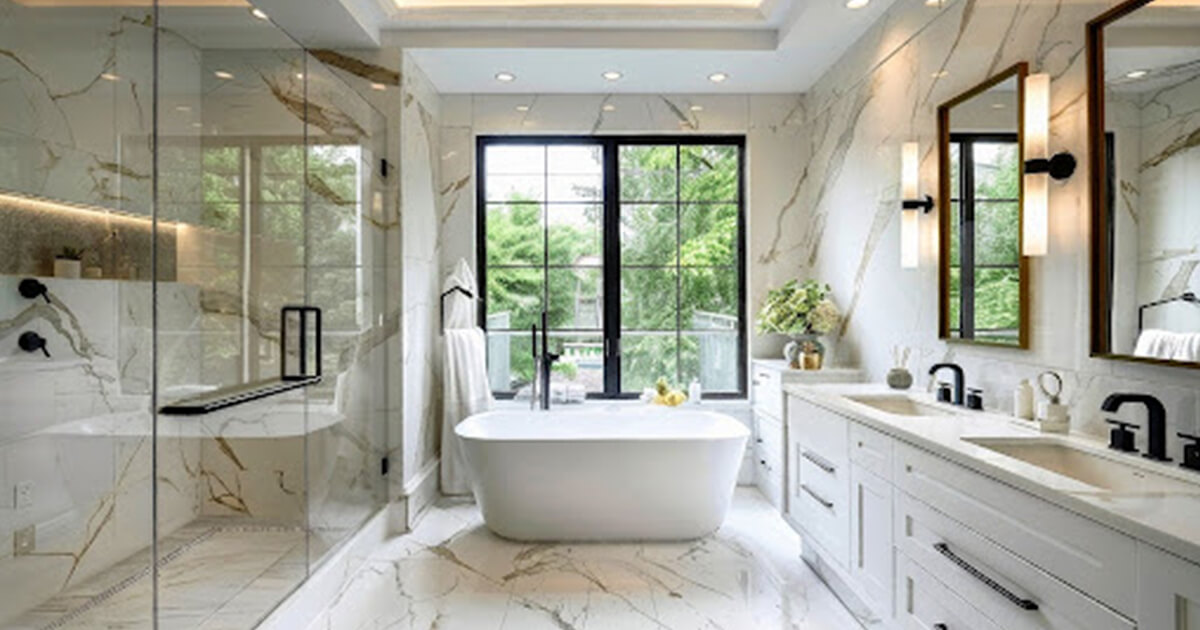

The modern bathroom is undergoing a profound evolution. Homeowners are moving away from sterile, clinical environments that feel like showrooms and are instead embracing spaces focused on warmth, luxury, and long-term functionality. The focus has shifted from surface-level cosmetics to high-performance layouts, wellness-oriented features, and organic materials that offer a sense of physical and mental restoration.
As personal schedules become more demanding, the residential washroom is reclaiming its identity as a primary sanctuary. The leading design shifts of this year blend intentional spatial engineering with rich haptic experiences, turning basic utility into an immersive daily ritual.
The Rise of Warm Minimalism and Organic Textures
For years, brilliant white marble and stark, cold gray palettes dominated luxury bathroom renovations. This year marks a definitive departure from that aesthetic toward warm minimalism. This approach maintains the clean lines and clutter-free organization of traditional minimalist design but replaces cold, reflective surfaces with rich textures and earth-toned materials.
The foundation of this trend relies on raw, tactile elements. Homeowners are opting for hand-applied finishes such as clay plaster, microcement, and lime wash to introduce depth and movement to the walls. These materials eliminate the need for uniform paint or massive expanses of polished drywall, immediately making large and small environments feel more secure and grounded.
Materiality also extends heavily into tile selection. High-gloss finishes are stepping aside for satin and matte porcelain alternatives that mimic natural geological formations. Matte tiles inspired by limestone, travertine, and sandstone are highly favored for their ability to diffuse light softly throughout the space. Small-format, hand-painted, or artisanal tile panels are being utilized in niche areas, creating textured accent walls that celebrate subtle structural irregularities rather than geometric perfection.
The Furniture-Forward Vanity Movement
Bathrooms are increasingly borrowing design cues from living rooms and dining areas, blurring the traditional boundaries of household furniture. The standard, boxy laminate vanity cabinet is being replaced by custom, furniture-grade installations that emphasize wood grain, silhouette, and architectural weight.
Light woods such as white oak, ash, and bamboo remain heavily represented, particularly when paired with beige, sand, and greige backdrops. However, richer and darker species like walnut and rift-sawn oak are gaining rapid momentum. These vanities are often configured as floating units or constructed with distinct, elegant legs that lift the piece off the floor, introducing a sense of airiness while showcasing premium flooring underneath.
Fluted and ribbed details on cabinet faces are prominent features, introducing a rhythmic pattern that catches ambient light. These wood vanities are routinely topped with thick engineered quartz or satin-finish marble slabs featuring soft, muted veining. By focusing on the intrinsic beauty of the wood and stone, the vanity serves as a commanding sculptural anchor rather than a purely utility-driven storage unit.
Experiential Shower Enclosures and Hydrotherapy
The traditional tub-and-shower combination is being consistently replaced by massive, architectural shower enclosures engineered for sensory performance. The modern shower is no longer just a place to wash quickly; it is an integrated hydrotherapy center.
The physical design of these enclosures favors structural continuity. Flush-access, curbless shower entries create a seamless transitions from the main floor plane into the wet area, maximizing the visual footprint of the room. Frameless glass panels with advanced anti-limescale coatings ensure the barrier remains invisible, promoting an open and architectural aesthetic. Tiled half-walls are also being utilized to provide partial privacy while acting as a structural anchor for internal seating.
Inside the enclosure, water delivery is highly customized:
-
Thermostatic Control Interfaces: Digital and mechanical thermostatic valves maintain exact water temperatures, eliminating unexpected fluctuations and protecting users from scalding.
-
Multi-Outlet Configurations: System layouts combine ceiling-mounted rainfall heads, adjustable handheld sprayers, and strategically placed wall body sprays to deliver targeted tension relief.
-
Integrated Steam Generators: Vapor-sealed enclosures featuring sloped ceiling geometry to control condensation are turning standard showers into fully functional steam rooms, allowing for a complete wellness experience at home.
Soft Metallic Finishes and Fluid Fixtures
As the demand for a softer, more inviting aesthetic grows, the choice of plumbing fixtures and hardware has changed. Polished chrome and stark matte black are stepping aside for metallic finishes that exude physical warmth and classic longevity.
Brushed bronze, muted graphite, and brushed copper are leading the way for faucets, shower columns, and flush plates. These finishes are valued because they soften the hard lines of surrounding tile and glass, absorbing light rather than reflecting it aggressively.
The physical shapes of the fixtures are also undergoing a transformation. Designers are favoring fluid, organic lines and ergonomic silhouettes over rigid, industrial corners. Faucets feature gentle curves that feel comfortable to touch, and concealed valve systems are implemented behind walls to keep the focus purely on the structural silhouette of the spouts and handles.
Discreet Technology for Purposeful Automation
Technology in the modern bathroom is moving away from overt novelty and focusing strictly on wellness, sustainability, and hidden convenience. The goal is to integrate smart systems so seamlessly into the architecture that they remain completely invisible until needed.
Smart mirrors equipped with integrated, dimmable LED bands, automatic defogging pads, and internal Bluetooth connectivity are standard additions. These units allow users to adjust light temperatures from warm amber for evening relaxation to crisp daylight for morning routines.
Underfloor heating networks regulated by smart thermostats provide efficient thermal comfort, keeping stone and tile surfaces comfortable throughout winter. Intelligent toilets and bidet seats featuring heated surfaces, automated open-and-close lids, and self-cleaning cycles are seamlessly incorporated, prioritizing hygiene without disrupting the overall room design.
Water conservation is also automated through smart faucets that regulate water flow based on usage, tracking consumption metrics through home apps without diminishing water pressure or user experience.
Integrated Architectural Storage Solutions
With the home spa movement requiring more items like plush towels, specific skincare lines, and wellness devices, storage design has become an essential structural component. The goal is to keep countertops completely free of clutter to preserve a peaceful visual environment.
Instead of protruding storage towers, designers are relying on built-in architectural niches and recessed wall alcoves. These modules are integrated into the framing of both wet and dry zones, using prefabricated waterproofing systems to ensure structural longevity.
Vanity interiors are heavily customized with internal power outlets, dedicated charging stations for electric toothbrushes and shavers, and deep drawer dividers tailored to daily routines. Tall, vertical cabinetry is built flush with existing walls, providing ample capacity for linens while remaining virtually invisible to the casual observer.
Frequently Asked Questions
What are the main benefits of choosing a curbless shower over a traditional step-in shower tray?
Curbless showers eliminate the physical lip or barrier at the entrance, creating a flush floor surface that flows continuously from the dry vanity area directly into the wet zone. Visually, this seamless transition makes the entire bathroom appear larger and more cohesive. Functionally, it improves safety by eliminating a common tripping hazard, simplifies cleaning since there are fewer corners to scrub, and provides universal accessibility that accommodates aging-in-place design principles without sacrificing luxury aesthetics.
Is natural wood safe to use for cabinetry in high-moisture bathroom environments?
Yes, natural wood is safe and highly durable in bathrooms provided it is specified as bathroom-grade and treated correctly. Modern manufacturers utilize moisture-resistant core materials covered in high-pressure natural wood veneers or marine-grade solid timber that is sealed with water-resistant topcoats like polyurethanes or specialized oils. These finishes prevent moisture penetration and subsequent warping. Maintaining a reliable ventilation system to control relative humidity levels is also critical for protecting wood surfaces long-term.
Why are matte and satin tile finishes currently preferred over high-gloss options?
Matte and satin tiles offer distinct advantages in both safety and design. From a functional perspective, matte porcelain tiles provide significantly higher slip resistance when wet, making them the superior choice for shower floors and high-traffic wet zones. From an aesthetic standpoint, matte surfaces do not produce harsh glares under overhead lights; instead, they gently diffuse light to create a softer, more relaxing atmosphere. They are also much more forgiving when it comes to hiding water spots, dried soap scum, and fingerprints.
How does a thermostatic mixing valve improve the daily showering experience?
A thermostatic mixing valve blends hot and cold water automatically to a pre-selected temperature before it exits the shower head. It responds instantly to any sudden changes in the household water pressure, such as someone running a washing machine or flushing a toilet elsewhere in the home. This prevents sudden spikes of freezing or scalding water, keeping the output perfectly consistent throughout the duration of your shower.
What is microcement and how is it used in modern bathroom renovations?
Microcement is an ultra-thin, polymer-modified cement coating that can be applied by hand directly over a variety of existing substrates, including old tiles, drywall, and concrete surfaces. Because it is applied seamlessly, it creates a completely grout-free finish on floors, walls, and even vanity countertops. This lack of grout lines creates a highly modern, industrial-chic aesthetic reminiscent of a commercial day spa, while making the surfaces incredibly easy to sanitize and maintain.
How do dark wood elements fit into bathrooms that are aiming for a clean and serene look?
Dark woods like walnut or charcoal-stained oak provide a vital grounding element in modern design. Instead of making a space feel dark or enclosed, a dark wood vanity or accent panel introduces a sophisticated contrast when positioned against soft beige, sand, or greige wall tiles. The deep color and rich, visible grain patterns bring organic warmth into the room, ensuring that a minimalist, uncluttered bathroom looks intentionally curated rather than cold, clinical, or empty.
