
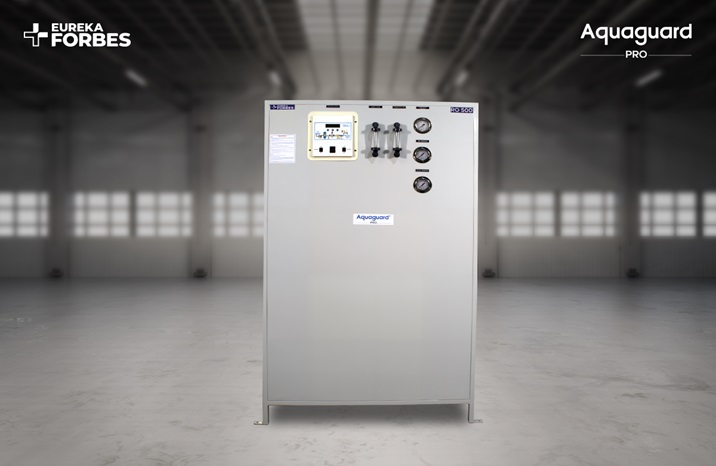

It is necessary to have clean drinking water to maintain your well-being, irrespective of wherever you are. Nowadays, water purification systems are employed in all kinds of environments, ranging from small apartments to large corporate offices, factories, schools, and hospitals. Although both domestic purifiers and those used in an industrial context are intended to clean untreated tap or groundwater, there are differences in their scale, daily capacity, and structural configuration, though both types are engineered to be equally efficient and reliable within their respective domains.
When you are arranging a workspace, improving your facility’s infrastructure, or looking after a large commercial area, knowing these basic differences will aid you in selecting the appropriate system for your particular requirements. The following is a clear and simple explanation of how a commercial water purifier plant varies from a standard home purifier.
1. Processing Capacity and Daily Water Output
The most obvious difference between a household purifier and a commercial system is the amount of purified water each one can purify in one day.
- Home Purifiers: These household units are compact and lightweight to perfectly fit into modern kitchens. They use food-safe, durable spares without compromising on build quality or safety.
- Commercial Systems: Large facilities require hundreds or even thousands of litres of potable water every day. A special water purifier plant is designed to have a purification capacity ranging from 50 litres per hour to more than 1,000 litres per hour. These robust systems provide a constant supply of clean water and ensure that the water does not run out during busy peak hours.
2. Design and Structural Build Quality
Since commercial installations have to deal with enormous quantities of water each day, their physical construction and outer structure are considerably stronger and more durable.
- Home Purifiers: These household units are small in size, light in weight, and are designed to have an attractive appearance when placed on a kitchen wall or countertop.
- Commercial Systems: Commercial systems make use of industrial-grade materials such as stainless steel frames, heavy-duty pressure pipes, and solid skid-mounted constructions. A durable commercial water purification unit is specially designed so that it can cope with high water pressure, constant motor operation, and harsh working conditions without wearing out quickly.
3. Purification Technology and Customisation
In domestic systems as well as in large-scale ones, core purification steps such as Reverse Osmosis (RO), Ultraviolet (UV) disinfection, and Ultrafiltration (UF) are used; the difference lies in how these technologies are customised and arranged.
- Home Purifiers: Residential home purifiers have fixed, pre-assembled filter cartridges enclosed in a sealed case. Manufacturers simply pre-tailor these standard cartridges to match common water sources like municipal or borewell supplies, making them safe and easy to use.
- Commercial Systems: The quality of raw water can vary greatly from one commercial site to another and from one industrial location to another. Large-scale systems provide customised multi-stage filtration and have bigger pre-filter vessels containing sand and activated carbon so as to remove heavy dirt, suspended solids, mud, and unpleasant odours before the water gets to the high-capacity RO membranes.
4. Filtration Load and Source Water Handling
Home units are designed specifically for residential water supplies that has low to moderate levels of total dissolved solids (TDS). They are highly optimized, precise multi-stage filtration to deliver clear, safe water efficiently for a household.
On the other hand, commercial systems are subjected to far more severe raw water conditions. They are capable of treating groundwater with a high level of TDS, hard water delivered by tankers, and untreated water from industrial lines. The big pre-filter tanks guard the main RO membranes against clogging too rapidly, which ensures that the purification process remains smooth and consistent even if the quality of the incoming raw water decreases.
The key difference is in scale and volume. While home units are engineered to handle a family’s daily demand efficiently in a compact frame, commercial systems are built with larger pre-filters solely to handle massive, continuous throughput.
5. Maintenance Demands and Operating Costs
The maintenance needed, and also the long-term running costs, will likewise depend on how hard the commercial water purification machine works each day.
- Home Purifiers: Getting a home purifier serviced is a simple and easy job. Its internal filters usually need to be replaced on regular intervals and routine cleaning requires very little effort.
- Commercial Systems: Since commercial plants operate continuously for long periods, they need frequent operational checks. Routine maintenance involves monitoring the pressure gauges, checking the performance of the pumps, carrying out backwashing of the sand filters, and at intervals replacing the large membrane filters. Even though maintenance is carried out more often, the total cost per litre of purified water is still considerably lower when operating on a commercial scale.
Summary Comparison
| Feature | Home Purifier | Commercial Water Setup |
| Primary Use | Small kitchens and apartments | Offices, schools, factories, hospitals |
| Output Rate | 15 – 30 Litres per hour | 50 – 1,000+ litres per hour |
| Build Material | Compact plastic bodies | Stainless steel and skid frames |
| Source Water | Tap water, low to medium TDS | High TDS, borewell, tanker, or municipal |
| Water Storage | Built-in small plastic tank | Large external stainless steel or PVC tanks |
Which One Do You Need?
Both home and commercial purifiers are highly efficient, advanced pieces of technology. The right choice simply depends on the volume you deal with. A home purifier is compactly designed to provide a family with pure, safe drinking water conveniently, while a commercial system is built to scale up and cater to large groups of people.
How a Water Purifier Plant Differs From a Home Purifier
