

Choosing a staircase for a new build or renovation involves far more than picking a timber species or deciding whether you want open or closed risers. Before any of those decisions can be made meaningfully, there’s a more fundamental question to resolve: what structural system is right for the space?
Get the structure right and everything else — material selection, balustrade design, handrail profile — flows from a solid foundation. Get it wrong and you’re working around a constraint for the life of the home. For anyone currently in the planning phase, understanding the core structural options and what drives the choice between them is time well spent.
The Structure Defines the Staircase
Every staircase has a structural system that carries the load of the treads, the users, and the balustrade assembly. In residential construction, that system typically takes one of three forms: a closed stringer (the traditional enclosed box), a mono stringer (a single central spine), or a double stringer configuration.
Each has distinct structural, aesthetic, and spatial implications. The right choice depends on the geometry of your void, the visual outcome you’re after, the floor-to-floor height, and the budget.
Closed Stringer
The most traditional configuration. Treads sit between two solid side panels that run the full length of the staircase. It’s a well-understood system, widely used in volume residential construction, and typically the most cost-effective option.
The trade-off is visual weight. Closed stringer stairs occupy space in a way that more open systems don’t. In a narrow void or a home where visual lightness is a design priority, this can feel heavy and dated.
Mono Spine
A single central stringer — usually fabricated from steel — carries all the treads, which cantilever out from the spine on both sides. The result is a staircase that appears to float, with nothing obstructing the view beneath the treads.
Mono spine systems are structurally demanding and require precise engineering, particularly at the connection points between the spine and the building structure. When executed well, they produce one of the most architecturally striking staircase forms available.
Double Spine
Double stringer stairs use two parallel steel stringers — one on each side of the tread — rather than a single central spine. This configuration distributes load differently, allows for wider tread spans without flex, and provides a structural base that suits a broader range of tread materials, including heavier options like concrete or thick hardwood slabs.
Visually, double spine stairs sit between the enclosure of a closed stringer and the pure floating quality of a mono spine. The two stringers frame the tread neatly, creating a refined, structured aesthetic that suits both contemporary and transitional interiors. For homes with wider voids or heavier material specifications, they’re often the most appropriate structural solution.
Why Steel Is the Default for Structural Spine Systems
Timber has its place in staircase construction — predominantly in treads, handrails, and decorative elements — but when it comes to structural spine systems, steel is the overwhelmingly preferred material among experienced custom staircase builders for good reason.
Steel offers consistent structural performance at predictable dimensions. A steel stringer can be fabricated to tight tolerances, welded and finished to a clean standard, and engineered to carry the loads required under AS/NZS 1657 and the NCC without the bulk that a timber equivalent would require.
It’s also stable over time. Timber structural elements are susceptible to seasonal movement, which can cause creaking, misalignment, and finish cracking in a way that steel simply doesn’t. In a staircase — where every creak is audible and every slight movement in the structure affects the treads and balustrade above — that stability matters.
For homeowners working with custom staircase builders, specifying a professionally fabricated steel structural system is one of the clearest ways to protect the long-term quality and performance of the installation.
Glass Balustrades: What Makes Them Work
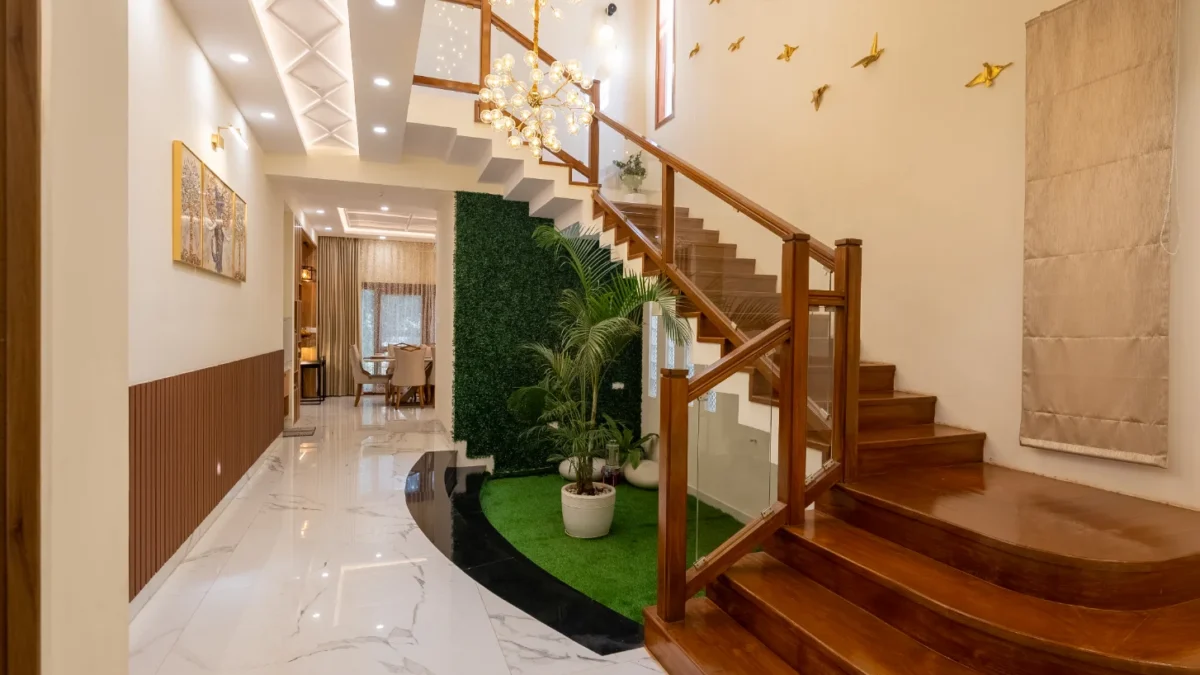
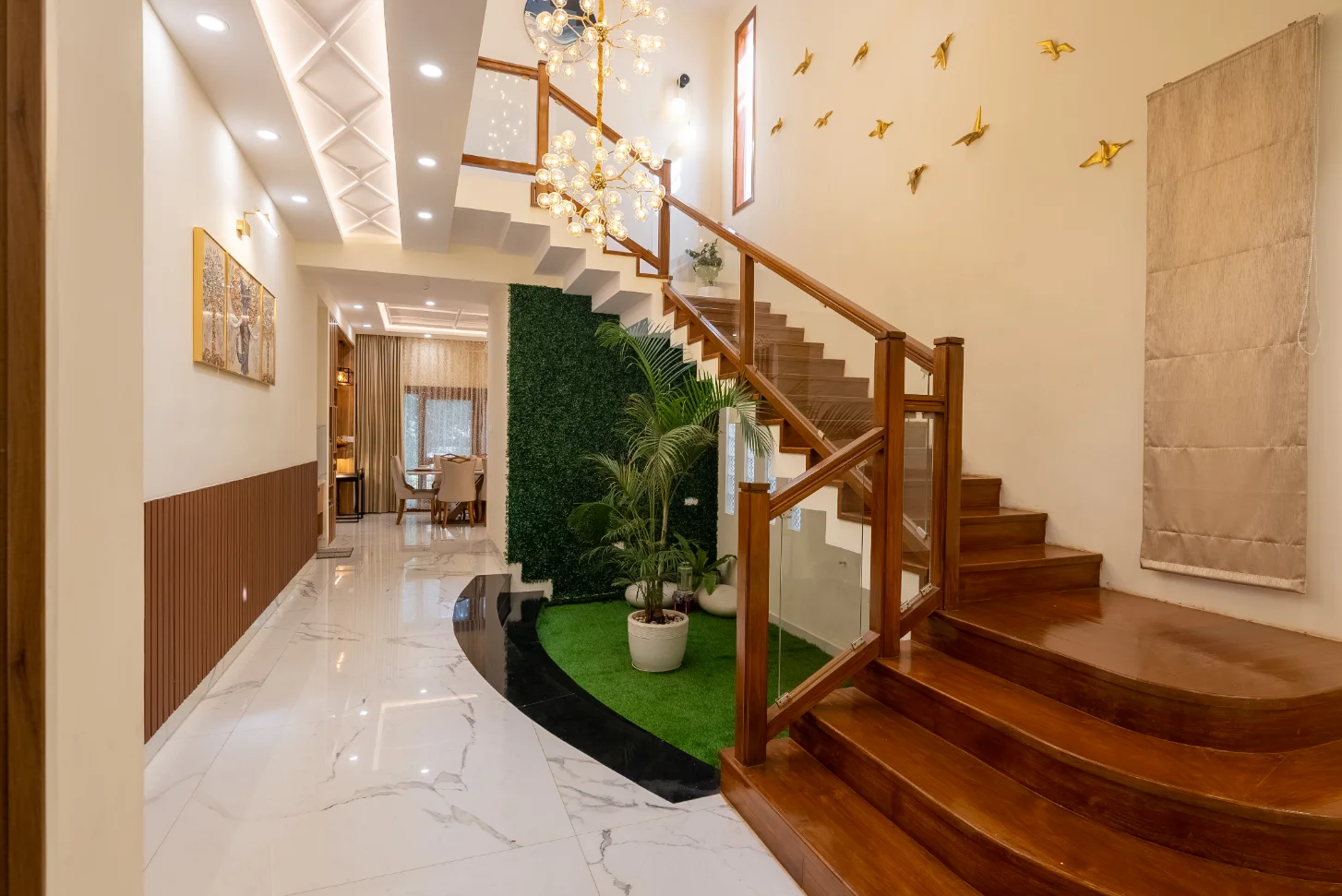
Few elements in a contemporary staircase have as much visual impact as the balustrade. And increasingly, glass balustrades are the first choice for homeowners who want to preserve sightlines, maximise natural light transmission between levels, and achieve a finish that feels genuinely architectural rather than merely functional.
Frameless and semi-frameless glass systems use toughened or laminated safety glass panels — typically 12mm or thicker — held by either floor-mounted spigots or a base channel. The absence of visible vertical posts is what gives frameless systems their character: the glass reads as a plane rather than a barrier.
What makes glass balustrades work structurally is precision. The spigots or channel must be set to exact alignment — any deviation is visible immediately and worsens over time. The glass panels must be cut to the correct dimensions with clean edges and the correct tolerances for the fixing system being used. And the overall assembly must satisfy the structural loading requirements of AS/NZS 1657, which specify minimum loads for balustrade systems in residential applications.
Done properly, glass balustrades are low maintenance, highly durable, and timeless. Done poorly, they’re a source of ongoing frustration — panels that rock, fixings that corrode, and sightlines interrupted by misalignment that no amount of adjustment will fully correct.
The Handrail: Where Compliance Meets Craft
The handrail is simultaneously the most-touched element of any staircase and one of the most regulated. AS/NZS 1657 specifies requirements for handrail height, graspability, return end treatment, and continuity — all of which must be met regardless of the aesthetic choices made elsewhere in the design.
Within those constraints, however, there’s considerable scope for design intent. A round 40mm timber handrail on a wall-mounted bracket communicates something entirely different from a flat-top steel rail with a powder-coated finish. A continuously curved handrail on a curved stair demands a different fabrication approach again.
The case for using a dedicated handrails installer rather than treating it as a task for the general builder comes down to this: the handrail sits at eye level throughout the staircase and is gripped daily for the life of the home. The quality of the joinery at the newel post, the consistency of the profile, and the precision of the wall bracket positioning are all immediately apparent. A specialist who has installed hundreds of handrails brings a standard of execution that a generalist cannot reliably match.
Bringing Structure and Aesthetics Together
The most successful staircase projects are those where the structural system, the material selection, the balustrade design, and the handrail specification are all considered together from the outset — not sequenced as a series of separate decisions made at different points in the build.
When a double spine steel structure is paired with wide-format hardwood treads, frameless glass panels, and a slim round timber handrail, the result is coherent because every element was specified in relation to every other. When those decisions are made independently and assembled on site, the result almost always reveals itself in the details — a handrail profile that clashes with the stringer finish, a glass panel height that doesn’t quite relate to the tread geometry, a fixing system that looks right in isolation but reads as inconsistent alongside everything else.
The structural conversation is where the staircase design begins. Start there, work outward to the materials and finishes, and involve a specialist who can manage the coherence of the whole — not just the fabrication of the parts.
Final Thoughts
A staircase is the one element in a home that combines daily function, structural engineering, material craft, and interior design in a single object. It deserves the same design rigour you’d apply to any other major investment in the build.
Understanding the structural systems available, the materials best suited to each, and the compliance requirements that govern the whole assembly puts you in a far stronger position to have productive conversations with specialists — and to evaluate what they’re offering you. The outcome is better for it, and so is the home.
